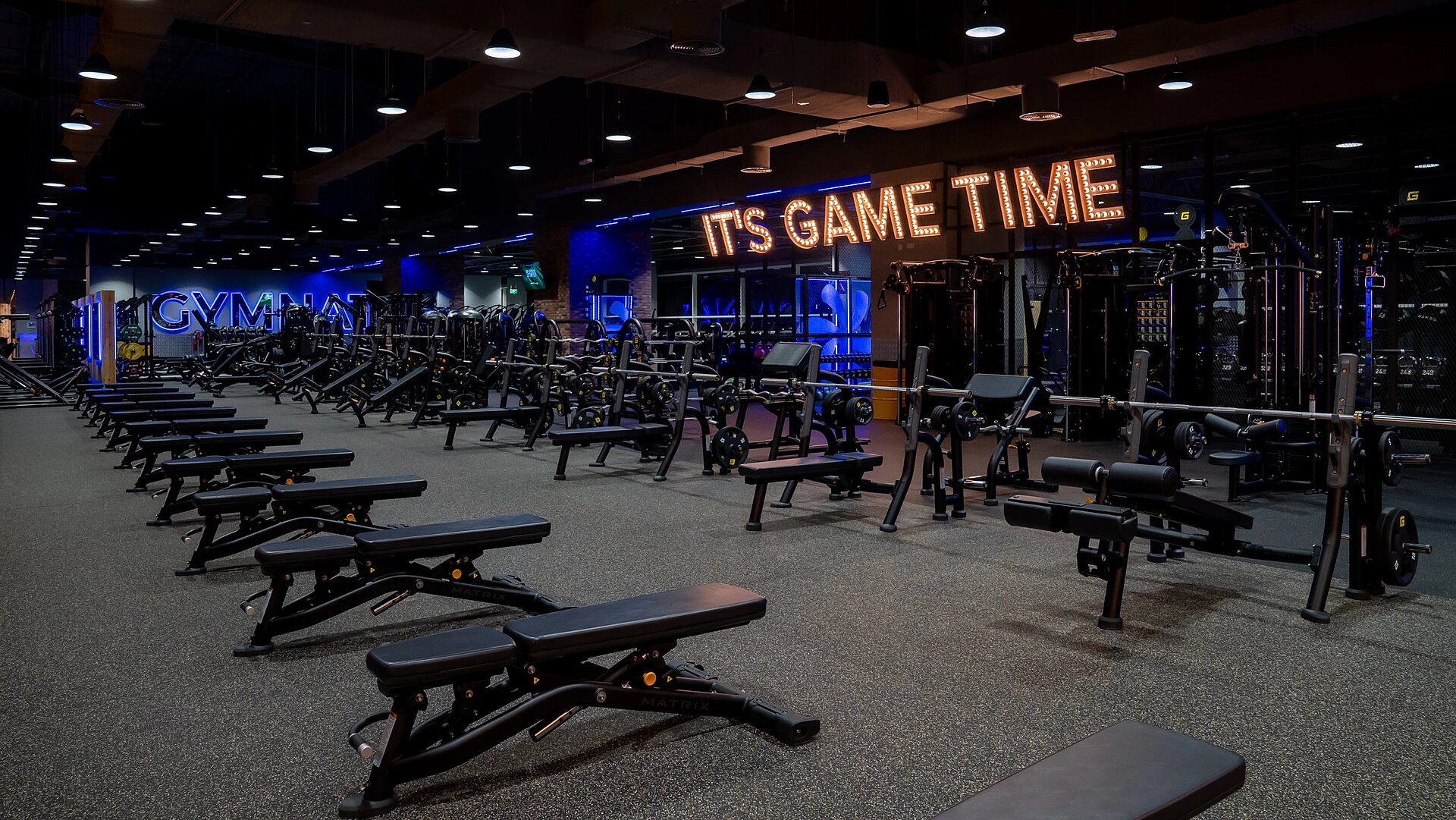
Set up the room so training starts in under two minutes.
A home plan fails when the equipment is buried, the floor is cramped, or every session begins with moving half the apartment. Keep the space simple and repeatable.
- Leave one stable training rectangle clear enough for hinges, split squats, rows, and floor work.
- Store dumbbells within immediate reach so there is no “setup tax” before the first set.
- If possible, add one bench and one resistance band for exercise variety without clutter.
- Use a timer, water, and training log in the same corner every session.
Use one lower day, one upper day, and one blended session.
Lower-body and trunk
Goblet squat, Romanian deadlift, reverse lunge, calf raise, and a trunk stability drill.
Upper-body push and pull
Dumbbell floor press or bench press, one-arm row, overhead press, lateral raise, and curls or triceps work.
Mixed day with conditioning
Split squat, row, push-up or press, hinge variation, and a short finisher like carries or intervals.
Use moderate-to-high reps well
Home dumbbell training often shines in the 8 to 20 rep range where loading limitations matter less.
When load options are limited, progress with control and density.
Home setups often top out earlier than commercial gyms. That does not mean progress stops. You can use reps, tempo, pauses, unilateral work, and shorter rest periods to make the current dumbbells do more.
- Add reps until you reach the top of the range with clean form.
- Slow the lowering phase or pause in the hardest position for more local tension.
- Use split squats, single-arm rows, and other unilateral work to raise challenge without huge loads.
- Track total work done in a fixed time block when the session includes circuits.
Protect recovery even in a compact home plan.
Home training can trick people into doing too much just because the equipment is always visible. Treat it like a real plan: set the days, define the duration, and stop adding random extras once the main work is finished.
Use walking, mobility, or light cycling on the off days if it helps you feel better, but keep the heavy work organized so it remains sustainable.